

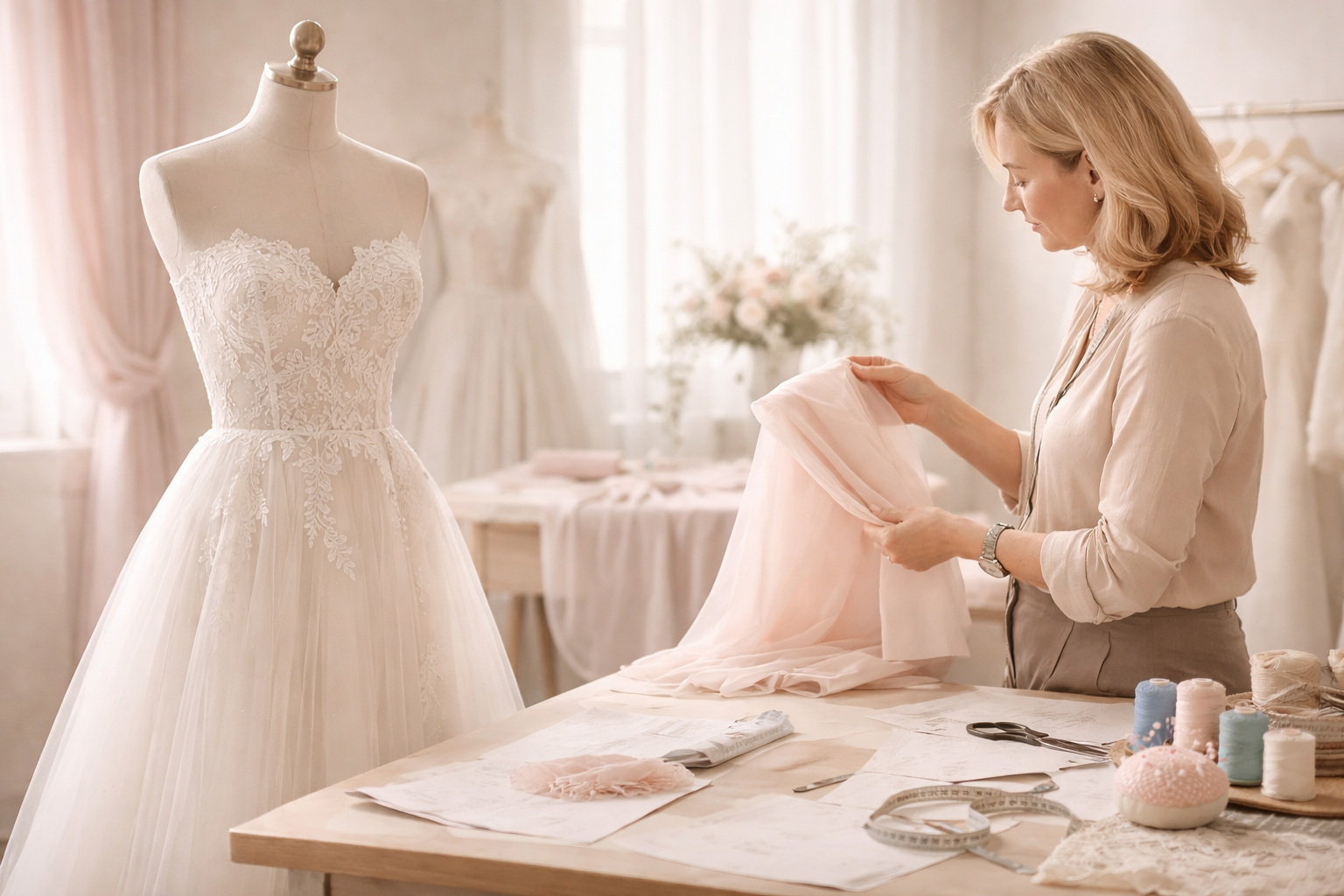
Everything You Need to Know Before Getting Your First Custom Dress
When you consider ordering a custom dress for the first time, the process can feel overwhelming. You likely have questions about the cost, the timeline, or whether the final result will truly fit your body and vision as perfectly as you hope.
At Zyvanea, having helped over 2,000 women create their dream dresses, we have answered these questions for years.
This blog explains:
- What a custom dress is (and how it differs from ready-made)
- The real costs and investment breakdown
- Step-by-step timeline from consultation to delivery
- Essential measurements and fittings required
- How to choose the best fabric for your first order
- Real client transformation stories
What Is a Custom Dress?
Before diving into the details, let us establish what we mean by a custom dress and why it differs fundamentally from the ready-made clothing hanging in department stores.
A custom dress is a garment designed and constructed specifically for your body measurements, personal style preferences, and chosen occasion. Unlike ready-made clothing that follows standardized sizing charts created for hypothetical average bodies, custom dresses begin with you as the starting point.
The journey from concept to creation involves multiple touchpoints. Your input shapes every decision, from silhouette selection to fabric choice, from neckline design to hem length. The result is a one-of-a-kind piece that exists nowhere else in the world.
The Key Differences Between Custom Dress vs. Ready-Made
| Feature | Custom Dress | Ready-Made Dress |
|---|---|---|
| Fit | Your exact measurements | Standard sizing |
| Design | Fully personalized | Limited options |
| Timeline | 7-10 Days | 3 - 6 Days |
| Exclusivity | One of a kind | Mass produced |
| Longevity | 5-10+ years | 1-3 years average |
| Alterations needed | None | Often required |
The fundamental difference lies in the approach. Ready-made fashion asks you to conform to the garment. Custom fashion asks the garment to conform to you.
This distinction matters because real bodies rarely match standardized sizing. Perhaps your shoulders are broader than average. Maybe your torso is longer. Maybe one hip sits slightly higher than the other. These variations are completely normal, yet ready-made clothing cannot accommodate them. Custom dresses embrace them.
Many first-time clients ask why the same dress can look stunning on a mannequin but feel disappointing on their own body. The answer lies in how mannequins are designed versus how real bodies are shaped. If you have ever felt that disconnect while shopping, Why Dresses Look Different on You Than on the Mannequin explains the science and psychology behind it.
Understanding the True Investment
One of the first questions every potential client asks is about cost. It is a valid concern, and we believe in complete transparency.
Custom dresses typically range from $120 to $2,000 or more, depending on several factors. While this represents a higher upfront investment than fast fashion alternatives, the value proposition changes dramatically when you consider the complete picture.
What Influences Custom Dress Cost?
- Fabric Type and Quality: Premium fabrics like silk, high-quality wool, and specialty textiles command higher prices.
- Design Complexity: The more detailed your design, the higher the investment.
- Embellishments and Detailing: Hand-sewn beading, embroidery, lace appliques increase cost.
- Designer Expertise: Experience ensures superior results.
The True Cost Comparison
| Dress Type | Average Price (USA) | Expected Longevity | Fit Quality |
|---|---|---|---|
| Fast Fashion | $50 - $150 | 1-2 years | Poor to Average |
| Department Store | $150 - $400 | 2-3 years | Average |
| Custom Made | $400 - $2,000+ | 5-10+ years | Perfect |
While researching custom clothing, you may come across terms like “bespoke” and “made to measure”. To avoid confusion, The Real Difference Between Bespoke and Made to Measure explains which option fits your needs best.
The Custom Dress Journey
Understanding the timeline helps set realistic expectations and reduces anxiety throughout the process.
If you are new to custom clothing, What Actually Happens During Your First Dress Fitting explains exactly what to expect.
Step-by-Step Timeline
What Measurements Are Needed for Stitching a Custom Dress?
Accurate measurements form the foundation of a perfectly fitting custom dress. Here is what we need and why each measurement matters.
Essential Measurements
- Bust: Measured at the fullest point, this determines bodice width and dart placement.
- Waist: Taken at your natural waistline, typically the narrowest part of your torso.
- Hips: Measured at the fullest point, usually seven to nine inches below the waist.
- Shoulder Width: The distance between shoulder points affects overall garment proportion.
- Arm Length: Critical for sleeve design and proportion.
- Back Length: From base of neck to waist, determining bodice proportions.
- Front Length: Accounts for bust projection and ensures proper bodice fit.
- Desired Dress Length: From waist to your preferred hemline.
Additional Measurements for Perfect Fit
For more complex designs, we may also measure neck circumference, armhole depth, across-back width, and bicep circumference. These additional data points ensure every aspect of your dress fits beautifully.
Dress Silhouettes Explained
| Silhouette | Best For | Ideal Occasion |
|---|---|---|
| A-Line | All body types | Versatile |
| Sheath | Hourglass, Rectangle | Professional, Cocktail |
| Fit and Flare | Pear, Hourglass | Casual, Semi-formal |
| Empire Waist | Apple, Petite | Formal, Maternity |
| Mermaid | Hourglass | Formal Events |
You do not need to arrive with a complete vision. Bringing inspirational images helps, but trusting your designer's expertise often leads to even better results than you imagined.
Which Fabric Is Best for a First-Time Custom Dress?
Fabric choice significantly impacts how your dress looks, feels, and wears. For first-time custom dress buyers, we recommend starting with fabrics that are forgiving, comfortable, and versatile.
Beginner-Friendly Fabric Recommendations
- Crepe: This fabric drapes beautifully, minimizes wrinkles, and works across multiple seasons. Its subtle texture photographs well and forgives minor fitting imperfections.
- Quality Cotton: Breathable, easy to care for, and available in endless colors and prints. Perfect for casual custom dresses.
Caring for Your Custom Dress
Your custom dress deserves proper care to maintain its beauty for years.
- Storage: Use a padded hanger for structured dresses. Store in a breathable garment bag away from direct sunlight.
- Cleaning: Follow fabric-specific care instructions. Many custom dresses benefit from professional dry cleaning.
- Maintenance: Address minor repairs promptly before they become major issues. Check seams and hems periodically.
Everyday Wear vs. Special Occasions
Is a Custom Dress Suitable for Everyday Wear?
This is one of the most common misconceptions about custom clothing. Many people assume custom dresses are only for weddings or galas. The reality is quite different.
Custom dresses work beautifully for everyday life. In fact, many clients find the greatest value in custom pieces for their professional wardrobes.
Consider the frustration of searching for work-appropriate dresses that fit properly, flatter your body, and meet your professional needs. Standard sizing rarely accommodates real body proportions. Spending hundreds on alterations adds cost without solving fundamental fit issues.
Custom professional dresses eliminate this frustration. Clothes that fit perfectly require less mental energy each morning and project confidence throughout the day.
Custom Dress Applications
| Occasion Type | Custom Dress Examples |
|---|---|
| Work/Professional | Tailored sheath, Structured wrap dress |
| Casual Everyday | Cotton sundress, Linen midi dress |
| Date Night | Cocktail dress, Elegant slip dress |
| Formal Events | Evening gown, Structured maxi |
| Special Occasions | Wedding guest attire, Gala dress |
Building a custom wardrobe over time creates a collection of perfectly fitting pieces that work together seamlessly.
Custom Dress Success Stories
Nothing illustrates the power of custom clothing better than real client experiences. Here are three transformations that represent the range of custom dress possibilities.
Case Study 1: The Career Milestone Dress
Client: Rebecca M., Marketing Director, New York
Challenge: Rebecca had recently earned a significant promotion and needed a powerful yet feminine dress for her announcement and subsequent board presentations.
Solution: The Zyvanea design team created a custom navy sheath dress with strategic darting.
Result: "For the first time in my career, I felt like my clothes commanded the same respect as my work."
Timeline: 2 weeks | Investment: $650
Case Study 2: The Mother-of-the-Bride Journey
Client: Linda S., Retired Teacher, California
Challenge: Linda wanted to look elegant at her daughter's wedding but struggled with post-surgery body changes.
Solution: A floor-length champagne gown with custom sleeve length and built-in support.
Result: "I cried when I saw myself in the mirror. I felt beautiful for the first time in years."
Timeline: 2 weeks | Investment: $1,200
Case Study 3: The Petite Professional Solution
Client: Amanda T., Financial Analyst, Chicago
Challenge: At four feet eleven inches tall, Amanda struggled with ill-fitting professional dresses.
Solution: A capsule of three custom work dresses designed for her proportions.
Result: "I finally look polished instead of like I borrowed someone else's clothes."
Timeline: 2 weeks for 3 dresses | Investment: $1,500 total
What Our Clients Say
"After years of frustration with off-the-rack sizing, my first custom dress from Zyvanea literally changed how I dress."
— Sarah Thompson, Seattle, WA
"Professional, stylish, and finally, clothes that actually fit my body."
— Jennifer Williams, Boston, MA
"I ordered a custom gown for my anniversary dinner. The quality is exceptional."
— Emily Roberts, Denver, CO
"This is not fast fashion—it is investment dressing."
— Rachel Martinez, San Francisco, CA
Your Custom Dress Questions Answered
What is a custom dress, and how is it different from ready-made clothing?
A custom dress is a garment created specifically for your body measurements, style preferences, and chosen occasion.
Is getting a custom dress more expensive than buying off-the-rack?
While the upfront cost is higher, custom dresses often provide better long-term value.
How many fittings are usually required for a custom dress?
Most custom dresses require two to three fittings.
Which fabric is best for a first-time custom dress?
Crepe, linen, satin, georgette, or quality cotton.
Ready to Experience the Custom Dress Difference?
You have now learned everything essential about the custom dress journey. You understand the investment, the timeline, the process, and the transformative results that await.
Perhaps you have spent years frustrated by clothes that never quite fit. Maybe you have an upcoming occasion that deserves something extraordinary. Or perhaps you simply want to experience what it feels like to wear something made exclusively for you.
Whatever brings you to this moment, we are ready to help.
Your first custom dress is not just a purchase. It is the beginning of a new relationship with your wardrobe. One where clothes work for you, not against you. One where getting dressed becomes a pleasure rather than a compromise.
Book Your Consultation


