

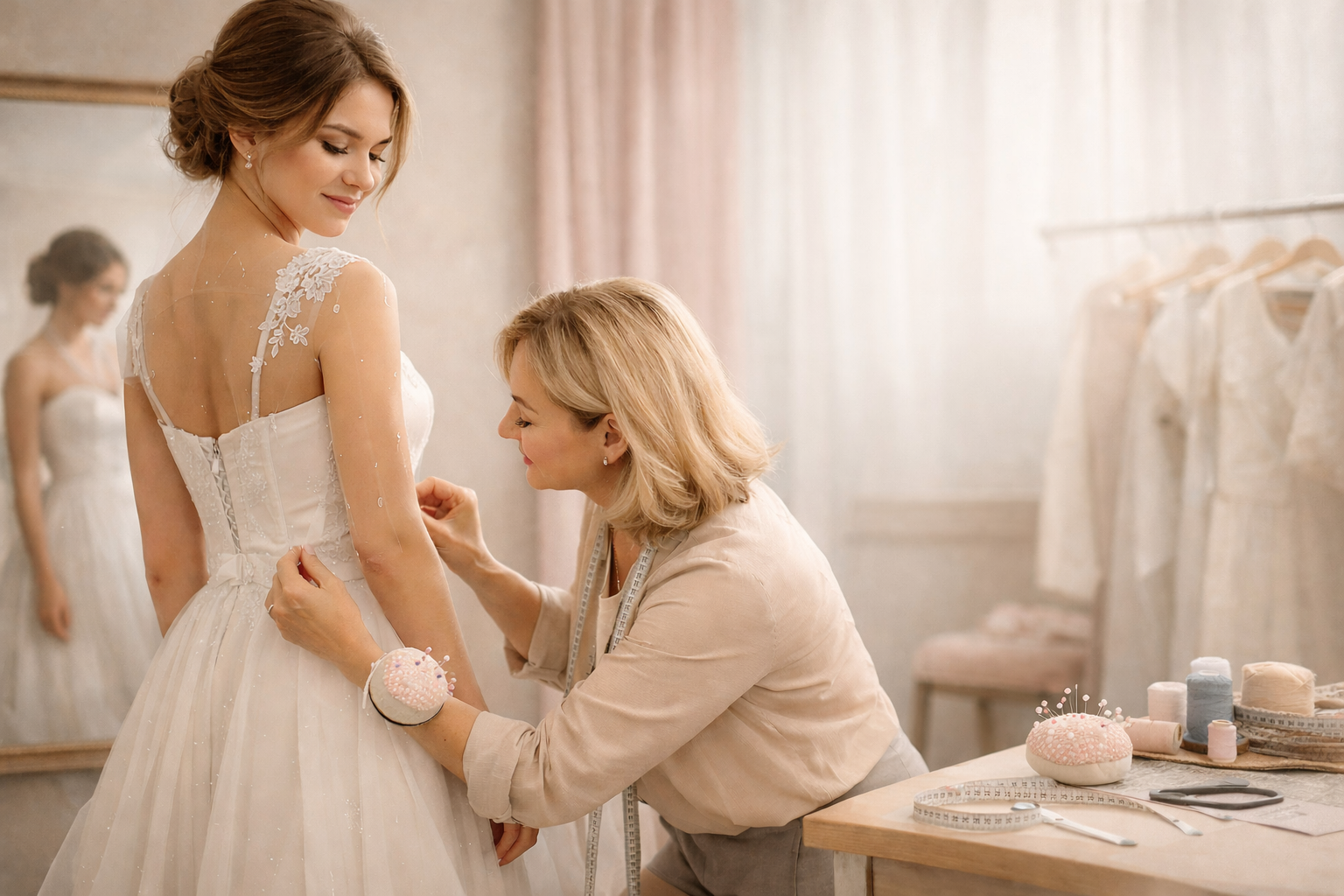
What Actually Happens During Your First Dress Fitting
Your first dress fitting marks the exciting moment when your custom dress transforms from concept to reality. This is where fabric, measurements, and design come together on your body for the very first time.
If you have never experienced a professional fitting appointment, the process might seem mysterious. What exactly happens behind those fitting room doors? How should you prepare? What should you expect?
This fitting is just one part of a much larger journey. From selecting your design and fabric to understanding costs, timelines, and long-term value, your first fitting makes the most sense when viewed in the full context of custom clothing. If you are new to this world, Everything You Need to Know Before Getting Your First Custom Dress walks you through the entire process from start to finish.
This guide explains everything about your first dress fitting, drawing from our team's experience conducting over 500 fitting appointments annually across the United States and Europe.
What This Guide Covers
- Purpose of the First Dress Fitting
- How to Prepare for Your Fitting Appointment
- What to Bring and Wear
- Step-by-Step Fitting Process
- Areas Checked During First Fitting
- Timeline and Duration
- Adjustments and Feedback
- What Happens After First Fitting
- Real Client Fitting Experiences
- Frequently Asked Questions
Why Your First Dress Fitting Matters
The first dress fitting is the critical checkpoint in your custom dress journey. This appointment serves multiple essential purposes that determine the success of your final garment.
During this session, your designer verifies that measurements have translated correctly from paper to fabric. What works mathematically does not always work on a living, breathing body. The first fitting reveals any discrepancies.
Your designer also assesses the overall silhouette and structure. They examine how the fabric drapes, where seams fall, and whether the proportions match your vision. This three-dimensional evaluation cannot happen until the dress exists in physical form.
Most importantly, the first fitting identifies adjustment areas before final construction begins. Making changes now is straightforward. Making changes after final stitching is difficult and sometimes impossible.
Remember that the dress you see at your first fitting is NOT the final product. It is a working prototype designed to be refined. Some areas may be pinned rather than sewn. The hemline may be unfinished. This is normal.
Many first-time clients are surprised by how different a dress can look once it is on a real body. A garment that appeared flawless on a hanger or mannequin may suddenly reveal fit issues, posture differences, or proportion shifts. This moment often answers a long-standing question that shoppers carry for years. Why Dresses Look Different on You Than on the Mannequin explains the visual and structural reasons behind this experience and why fittings are essential for real bodies, not display forms.
What to Wear to a Dress Fitting Appointment
Your clothing choices for the fitting appointment directly impact the accuracy of adjustments made to your dress.
- Undergarments matter tremendously. Wear the exact undergarments you plan to wear with your finished dress. If your design is strapless, wear a strapless bra. If you plan to wear shapewear, bring it. If the dress has a fitted silhouette, choose seamless underwear.
- Shoes affect hemline decisions. Bring shoes matching the heel height you intend to wear. A two-inch difference in heel height changes where your hemline falls significantly.
- Wear simple, easy-to-remove outer clothing. You will be changing in and out of your dress, so complicated outfits slow the process. Avoid jewelry that might snag delicate fabric.
- Keep makeup light to prevent transfer onto your dress. Foundation and lipstick can mark fabric that brushes against your face during dressing.
What Happens During a First Dress Fitting: Step-by-Step
Understanding the process removes anxiety and helps you participate effectively in your fitting session.
Fitting Timeline Overview
| Stage | Duration | Purpose |
|---|---|---|
| Arrival and Prep | 5 minutes | Setup and consultation |
| Dressing | 5-10 minutes | Initial fit check |
| Assessment | 10-15 minutes | Silhouette evaluation |
| Pinning | 15-20 minutes | Marking adjustments |
| Discussion | 10 minutes | Feedback exchange |
| Documentation | 5 minutes | Recording notes |
| Total | 45-60 minutes | Complete session |
Areas Examined During Your First Dress Fitting
Your designer systematically evaluates every aspect of your dress during the first fitting.
Bodice Fit
The bodice receives careful attention. Your designer checks bust alignment and dart placement to ensure proper shaping. Shoulder seams should sit exactly at your shoulder point. Armholes must provide comfort without gaping or restriction. Back closure alignment affects both appearance and functionality.
Waist and Hip Fit
Waistline placement determines overall dress proportion. Your designer verifies whether the waist sits at your natural waistline or at the intended design position. Hip ease allows comfortable movement while maintaining clean lines. Side seams should fall straight without pulling or twisting.
Length and Hemline
Overall, dress length affects both appearance and practicality. Your designer checks hemline evenness around the entire circumference. If your design includes a train, its length and behavior receive evaluation.
Design Elements
Every decorative and structural element gets examined. Neckline shape and depth must match your original vision. Sleeve length and width affect both comfort and proportion. Placement of decorative elements like beading or embroidery is verified.
| Area | What Designer Checks | Common Adjustments |
|---|---|---|
| Bust | Dart placement, ease | Take in or let out |
| Shoulders | Seam position | Raise or lower |
| Waist | Alignment, comfort | Cinch or release |
| Hips | Movement ease | Adjust width |
| Length | Hemline balance | Shorten or lengthen |
First Dress Fitting Duration
A standard first fitting takes 45 to 60 minutes. This timeframe allows thorough evaluation without rushing important decisions.
Complex gowns with intricate detailing may require 60 to 90 minutes. Multiple layers, structured bodices, or elaborate embellishments demand additional attention.
Simpler designs can often be completed in 30 to 45 minutes. A straightforward sheath dress requires less evaluation than a multi-layered ball gown.
Several factors affect duration. Design complexity plays the largest role. The number of adjustment areas discovered during fitting adds time. Client questions and feedback naturally extend sessions. Movement testing for active occasions requires additional minutes.
What Adjustments Are Noted During First Fitting?
First fittings typically reveal several areas requiring refinement. Common adjustments include taking in or letting out seams for a better fit, raising or lowering hemlines for proper length, adjusting shoulder seams for correct positioning, modifying dart positions for improved shaping, altering neckline depth for the desired appearance, and changing sleeve length for proportion.
How Should a Custom Dress Feel During the First Fitting?
Expect the dress to feel close to your vision but not final. The fit should approximate the finished product while allowing room for refinement.
Some areas may be pinned rather than sewn, creating restrictions that will not exist in the finished garment. Movement should be possible, though it may feel limited in the prototype stage.
Voice any comfort issues immediately. Tightness, pinching, or restriction in specific areas should be communicated to your designer. These sensations guide adjustment decisions.
Design Modifications After First Fitting
Minor design changes are usually possible after your first fitting. Neckline adjustments, sleeve modifications, hemline changes, and strap additions can typically be accommodated.
Major structural changes present more challenges. Significant alterations to bodice construction, silhouette changes, or dramatic modifications may incur additional costs. These changes might also require additional fabric and extended timelines.
Fabric limitations sometimes restrict what modifications are possible. Once fabric is cut, certain changes become impractical regardless of desire.
We recommend finalizing design elements during the consultation phase whenever possible. Clear communication before cutting begins prevents difficult conversations later.
Next Steps After Your First Dress Fitting
Following your first fitting, your designer documents all adjustments thoroughly. Detailed notes ensure the construction team understands exactly what modifications are needed.
The construction team then implements these changes. Seams are adjusted, darts are repositioned, and hemlines are refined according to your fitting notes.
Your second fitting is typically scheduled one to two weeks after your first fitting. This timeframe allows adequate construction time while maintaining project momentum.
You may receive a summary of planned modifications for your records. This documentation helps you track progress and prepare questions for your next appointment.
The typical custom dress requires two to three total fittings. After your first fitting and subsequent adjustments, one to two additional sessions ensure perfection.
At this stage, some clients begin researching other custom clothing options and encounter terms like “bespoke” and “made to measure.” These labels are often misunderstood and can lead to unrealistic expectations about how much refinement and personalization is actually included. To avoid confusion as your dress moves forward, The Real Difference Between Bespoke and Made to Measure clarifies what each process truly involves and how it affects fit, craftsmanship, and outcome.
First Fitting Success Stories
Case Study 1: The Wedding Guest Transformation
Client: Katherine L., Attorney, Washington D.C.
Situation: Katherine needed a custom cocktail dress for her sister's wedding. She had never experienced a professional fitting before and felt nervous about the process.
First Fitting Experience: During her 50-minute first fitting, our specialist identified that her left shoulder sat slightly higher than her right. This common asymmetry goes unnoticed in daily life but affects how clothing hangs. Adjustments were marked to ensure perfect balance in her finished dress.
Result: "I had no idea my shoulders were uneven until that fitting. No wonder off-the-rack dresses never felt right. That single discovery changed how my clothes fit forever."
Case Study 2: The Mother-of-the-Groom Revelation
Client: Patricia H., Retired Nurse, Florida
Situation: Patricia ordered a custom gown for her son's destination wedding. She worried the dress would not match her vision.
First Fitting Experience: The first fitting revealed the bodice needed minor adjustment at the bust, and the hemline required shortening by two inches to accommodate beach terrain.
Result: "Seeing my dress for the first time was emotional. Even in its unfinished state, I could see it becoming exactly what I dreamed. The fitting process gave me complete confidence."
Client Experiences with Zyvanea Fittings
— Stephanie Wright, Austin, TX
— Amanda Collins, Miami, FL
— Nicole Peterson, Chicago, IL
FAQs
Ready to Schedule Your First Fitting?
Your first dress fitting is the exciting moment your custom dress comes to life. Our expert fitting specialists guide you through every step, ensuring comfort and confidence throughout the process.
Whether you are creating a gown for a special occasion or building a custom professional wardrobe, the fitting experience transforms your vision into reality.
Book Your Consultation


